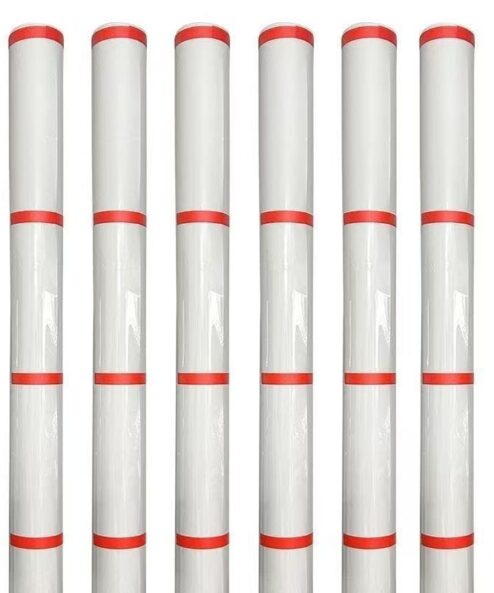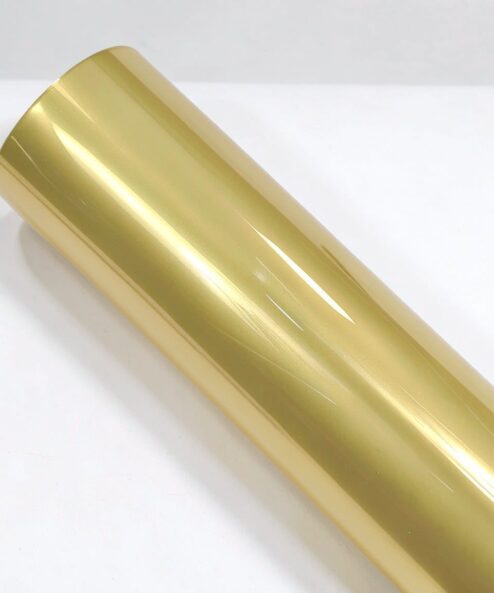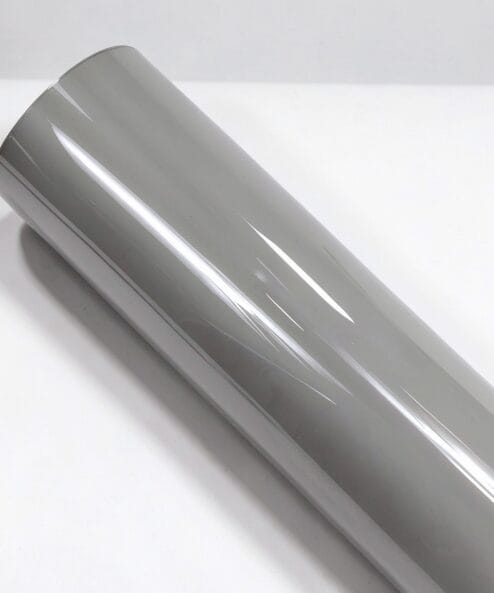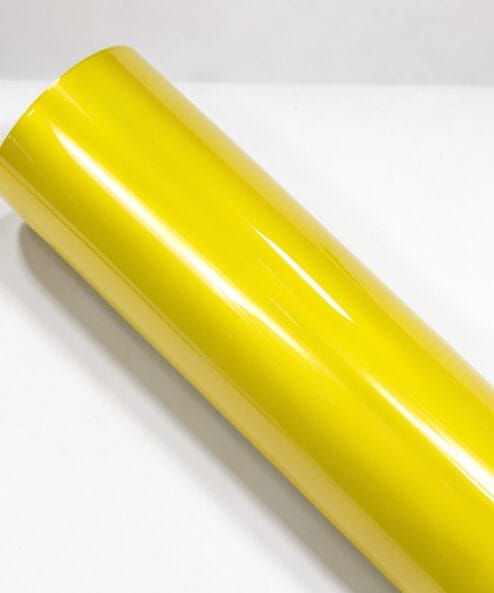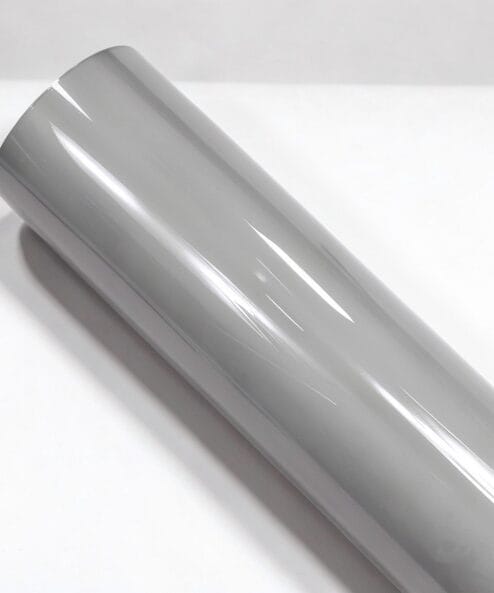
Paint protection film (PPF) is a clear or coloured urethane layer, usually 6.5–9.5 mil thick, bonded to painted panels to absorb stone chips, road grit and UV exposure. Shimao manufactures clear PPF, colour PPF and TPU colour-change wrap in Dongguan and supplies installers and distributors with full 1.52 m rolls from a one-roll minimum order.
What does paint protection film protect against?
PPF absorbs what paint cannot: 1–2 mm stone chips at highway speed, sand blasting, bird droppings, tree sap and UV fading. A 7.5–8.5 mil clear film keeps the factory paint intact underneath, so a leased or resale car stays original. Coloured PPF adds the same impact protection while changing the finish, and TPU colour-change wrap covers whole panels in 6–8 mil film.
Which PPF type fits which budget?
Clear TPU PPF at 7.5–8.5 mil is the top tier for gloss retention and an 8-year warranty. Coloured PPF costs more per roll but replaces a respray on a panel or a full body. PVC colour-change wrap at 3–4 mil is the entry point for a full colour change with a 3–5 year outdoor life. Installers typically stock one clear roll and two colour rolls to cover most jobs.
How is PPF installed and maintained?
Film goes on with a slip solution, a squeegee and heat: panels are cleaned, edges tucked, then post-heated to 60–70 °C to set the adhesive. Maintenance is a pH-neutral wash every two weeks, no wax on matte film, and a 30-day edge re-check. Adhesion and clarity are commonly verified against standard film test methods.
Reference material: ASTM International publishes the film test methods used for adhesion and optical properties, and NIST maintains public polymer property data.