
PPF Guide
Does Paint Protection Film Damage Paint? Honest Answer

Oct
Short answer: on healthy factory paint, no — properly applied and properly removed PPF is designed to release cleanly and leave the original finish underneath. Damage claims almost always trace back to three things: repainted or repaired panels, film that has aged past its service window, or someone peeling it off cold and fast. Those are surface-condition and technique problems, not a flaw in the film concept itself. Disclosure first: Cogarm runs a PPF manufacturing plant in Hebei, so read the rest with that in mind — but the logic below is the same one any honest installer will give you.
The Risk Map, Up Front
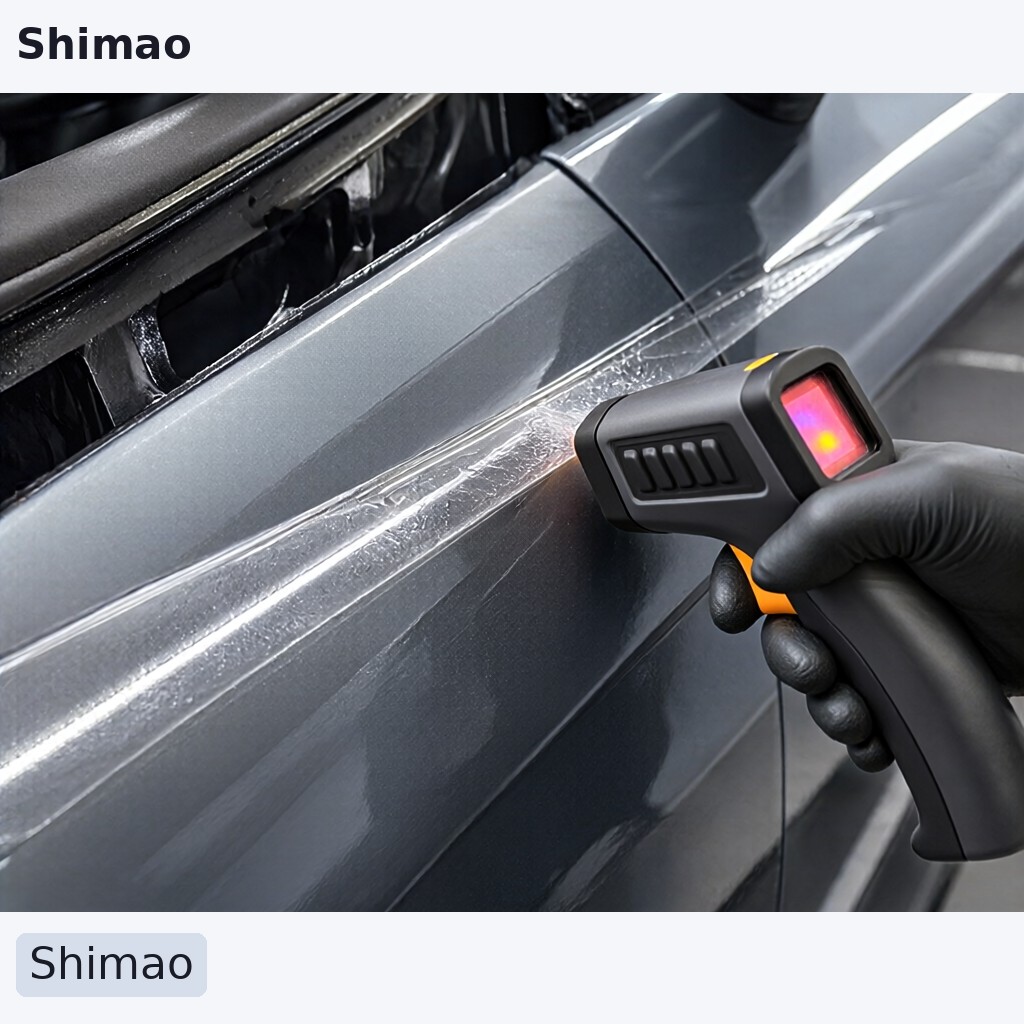
Before the explanations, here is where paint damage actually comes from:
| Risk factor | Likelihood | What causes it | Who controls it |
|---|---|---|---|
| Repainted or repaired panel | High | Weak paint-to-panel bond under the film | Vehicle history, checked at intake |
| Very old film | Medium–high | Adhesive cross-links and hardens over years | Replacement timing |
| Bad removal technique | Medium | Cold peel, wrong angle, excessive speed | Installer or DIY remover |
| Healthy OEM paint, correct removal | Low | — | — |
If your situation sits in the bottom row, worry less. If it sits in the top three, read on.
Why the Film Lets Go of Healthy OEM Paint Without Taking the Finish With It
Clean removability is not luck. It is engineered. A PPF adhesive has to hold through years of sun, wash cycles, and pressure washing, and still release from the clear coat when a tech heats it and peels it at a controlled angle. Those two demands fight each other, and the whole adhesive formulation lives in the compromise between them.
Two points worth internalizing:
- The film is the sacrificial layer. Stone chips, sand abrasion, and scuffs are meant to land in the polyurethane, not your clear coat. When an old sheet comes off covered in scars while the paint below is untouched, that is the product doing its job — not a defect.
- Paint-safe is not paint-history-proof. On original OEM paint, the bond between clear coat and panel was baked in a controlled factory process. On a resprayed panel, that bond is a body-shop variable. The film cannot know the difference.
From the Cogarm line: every batch goes through peel adhesion checks on standard 25 mm coupon strips before it ships, because a data sheet figure means nothing if the release behavior shifts between lots. What Cogarm cannot test from the factory is what your customer’s body shop did to the left rear door in 2019. That is why paint-history disclosure matters more than any single adhesive number.
Where Damage Actually Happens
1. Panels that have been resprayed or repaired
This is the number one risk factor the Cogarm intake team asks about. On a repainted panel, the weak interface is usually between the new paint and the panel — not between film and paint. If the body shop under-prepped or the primer keyed badly, even a gentle, heated peel can lift paint that was already marginal. The film gets blamed; the bond underneath was the problem.
Practical implication: before any removal, ask whether the panel is original. If nobody knows, assume the worst and remove slowly with heat.
2. Film that has been on the car too long
Adhesive ages. UV, heat cycling, and contamination migrating under lifted edges all make the release less forgiving year over year. Old film can tear into strips instead of coming off in one sheet, which raises both labor time and paint stress. Industry practice puts roll shelf life at roughly 12–24 months when stored at 18–25 °C, and installed film has a service clock of its own — written factory warranties in this trade typically run from 30 days up to 2 years, while some marketing copy floats 7–10 year claims. The gap between a written policy and a brochure number is exactly where aged-film disputes live. A written warranty is the manufacturer’s stated confidence window, not a promise that year-eight removal will behave like year-two.
3. Removal done badly
Most “the film pulled my clear coat” stories come down to temperature, peel angle, and speed. Pull hard on cold film at a steep angle and the adhesive plus any weak clear coat comes with it. Heat the film to its softening range, pull low and slow, and the same sheet releases cleanly. It is the difference between peeling tape off a warm hood and ripping it off a frozen one.
How Cogarm Frames This for Procurement and Distribution Teams
If you are sourcing from a paint protection film manufacturer for resale or an installer network, the messaging Cogarm recommends is deliberately narrow:
Say confidently: on OEM paint, the film protects and removes cleanly when removal is done correctly.
Publish alongside it: risk rises on repainted panels, heavily aged film, and uncontrolled removal. Hiding this is how you generate claims.
Standardize to keep margin:
- Paint-history disclosure on intake — OEM vs repaint, panel by panel.
- Condition-based replacement — swap film when you see edge lift, haze, or cracking, not after it goes brittle.
- A written removal SOP built on controlled heat and peel angle, never brute force.
- Warranty documents that split material defects from surface condition and removal technique.
Every one of those lines exists because the Cogarm team has seen the alternative. In quote discussions, the line item that moves last is always the removal-and-replacement guidance — buyers treat it as paperwork until the first dispute. Moving it up the list costs nothing and is the cheapest claims insurance you can buy.
How Cogarm Explains It to Car Owners
Plain version: for most cars with original factory paint, the film will not hurt your paint. It is built to come off cleanly when removed correctly.
Be cautious when: the panel has been resprayed, the film is very old, or somebody plans to rip it off cold in a driveway.
If you are unsure: do not force a DIY peel. Professional removal uses controlled heat and a low, steady peel to keep stress and residue down. It costs a fraction of a respray.
Practical Do and Don’t List
Do
- Establish the repaint history of every panel before removal.
- Treat removal as a controlled process with heat and a steady angle.
- Replace film at the first clear aging signals — edge lift, haze, cracking — rather than waiting until it is brittle.
- Get the written warranty, not the brochure claim, and read what it excludes.
Don’t
- Don’t peel cold and fast. Ever.
- Don’t read “warranty years” as “safe forever.” Aging changes removability regardless of what the policy says.
- Don’t install over failing clear coat and expect the film to hold it together.
FAQ
Does PPF damage factory paint?
Typically no. On healthy OEM paint, modern TPU films in the common 6.5–9.5 mil range are formulated to protect for years and release cleanly when removed with proper heat and technique.
Can PPF pull up clear coat?
It can, in two cases: when the clear coat is already weak — usually from a repaint or repair — or when removal is rushed, cold, and at a bad angle. Both are condition and technique problems.
Is a repainted panel really the biggest risk?
Yes. Repaint quality varies enormously by shop, and weak paint-to-panel adhesion can lift under any adhesive-backed product, not just PPF.
Does older film raise the risk?
Yes. Aged adhesive hardens and tears more easily, so removal takes more care. Contamination under lifted edges adds residue risk.
Should I remove the film myself?
If the paint history is unknown or the film shows brittleness or edge failure, professional removal is the lower-risk route. A heated, controlled peel beats a cold driveway rip every time.
Will removal always leave glue behind?
Not always. Residue risk grows with film age and poor technique. When it does occur, a citrus-based adhesive remover on cool paint usually clears it without marring.
