
Installation Tips
Commercial PPF: Fleet Paint Protection Film Supply | Shimao

Nov
Fleet vehicles earn their keep, and their paint pays for it. High annual mileage, outdoor parking, loading-dock contact and weekly washes wear a finish down faster than any private car ever will. Paint protection film — PPF — is the practical answer: a polyurethane barrier applied to the panels that take the hits, so the paint underneath stays intact through lease returns, resale and daily work. This guide covers the whole commercial program: which vehicles to protect, which zones to film first, how to package the offer, how PPF differs from vinyl, and how distributors build a repeatable fleet business on top of bulk roll supply.
We at Shimao write this from the factory floor in Hebei. Shimao manufactures paint protection film, color change film and window film on an OEM/ODM basis — your brand, your packaging, your spec — and a large share of the enquiries Shimao handles are exactly this: distributors and installer networks building standardized commercial vehicle protection packages.
Why a Fleet Program Built on PPF Makes Sense
A delivery van does not care how it looks. Its owner does. Visible paint damage on a fleet vehicle is a brand problem before it is a body-shop problem — customers notice a scarred hood on the van that pulls into their driveway. And the costs compound quietly: reconditioning before lease return, repainting before resale, hours of detailing before vehicle reassignment.
PPF interrupts that cycle at the source. Film applied before the damage happens absorbs stone chips, scuffs and wash abrasion, then either hides them through a self-healing topcoat or removes with the film at swap-out. For commercial buyers, that is the whole pitch: pay once at install, avoid paying repeatedly at recondition.
The Paint Damage Fleet Vehicles Actually Take
Before quoting anything, look at where commercial vehicles get hurt. The pattern is remarkably consistent across delivery, service and rental fleets:
- Stone chips along the front bumper, hood edge and leading panel edges
- Scratches at door cups, door edges and handle recesses
- Scuffs and gouges at rear loading sills and bumper tops
- Abrasion on rocker panels and lower doors from kerbs, steps and boots
- Bug residue and bonded road contamination baked onto front-end panels
- Mirror scarring from narrow lanes and tight parking structures
- Wash marring from repeated machine washing — the quiet killer of gloss
None of these are cosmetic trivia on a fleet. They drive resale deductions, lease-return penalties and the amount of polishing a service team does every quarter. The question buyers ask the Shimao team most at trade fairs is not “how thick is your film?” — it is “which zones should we film so the package pays for itself?” That question has a standard answer, and it is the next section.
Fleet Vehicle Types That Fit a PPF Program
Almost any vehicle a company operates is a candidate, but the economics differ:
- Delivery vans and last-mile vehicles — high mileage, constant kerb contact, strong brand visibility
- Service and utility vehicles — racks, ladders and tool contact on a daily basis
- Rental fleets — fast turnaround, constant driver changes, reconditioning pressure
- Company cars and commercial SUVs — executive presentation matters
- Pickups and light trucks — bed rails, tailgates and load-zone wear
One point worth stating plainly: fleet programs do not require full-body coverage. In most markets the sale is easier, the install is faster and the economics are cleaner with partial packages. A two-person crew needs one to three days for a full vehicle; a front-end package on the same vehicle can be done in a fraction of that, and across a 50-vehicle fleet that difference decides whether the project happens at all.
High-Impact Zones: Film These First
Standard practice in fleet work is to rank panels by contact frequency and repair cost, then film in that order:
- Front bumper and hood leading edge — stone chips, the highest-cost damage class
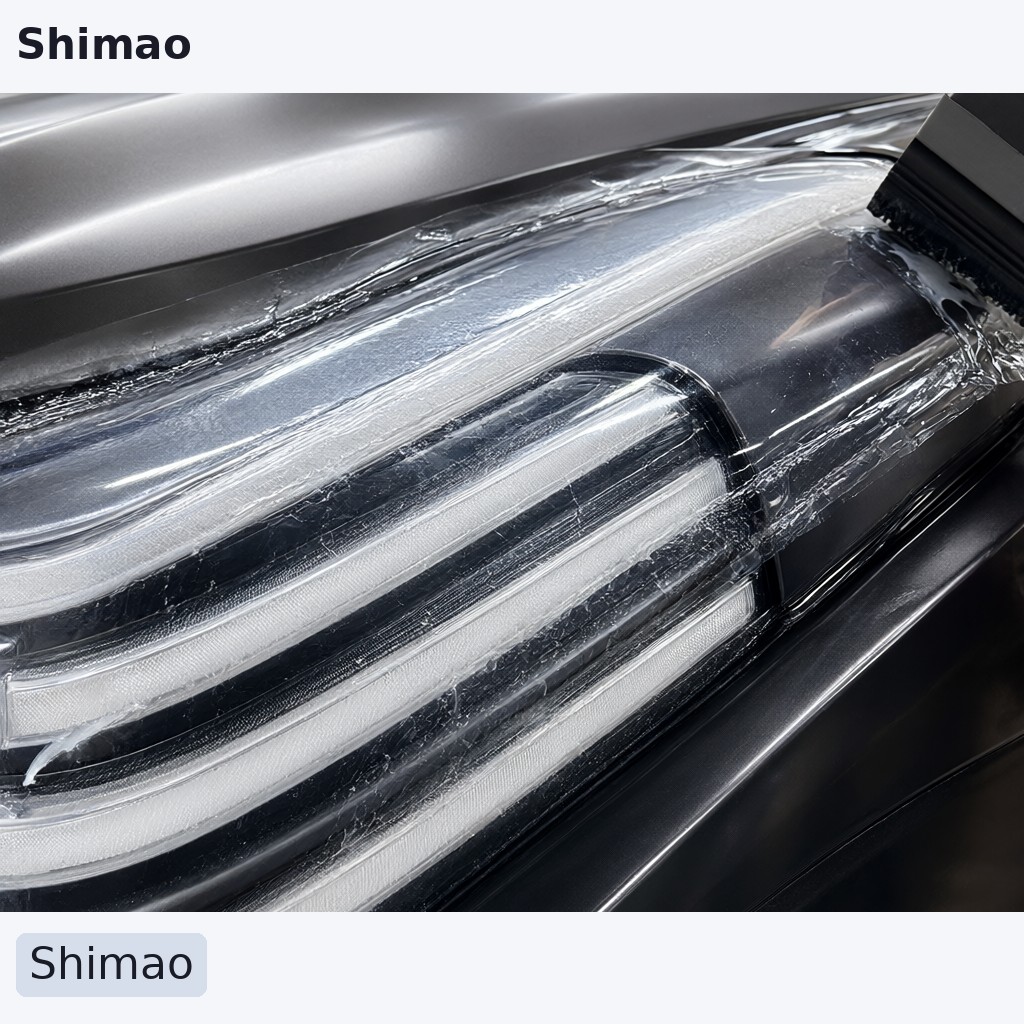
- Headlights and fog lamps — headlight protection film keeps lenses clear and avoids lens-replacement labour
- Door cups, edges and handles — daily contact damage, cheap to prevent
- Rear bumper top and loading sill — where cargo does the damage
- Rocker panels and lower doors — kerb and boot abrasion
- Mirror caps and A-pillar edges — narrow-road casualties
- Windshield leading edge — windshield protection film on the glass contact zone for fleets running high motorway mileage
Start with zones one through four and you have a package that quotes fast, installs fast and shows a visible result. Everything beyond that is an upsell.
Packaging the Offer: Three Tiers Beat a Price Per Roll
Selling film by the square metre forces every conversation into price. Selling coverage tiers turns it into a product. Most successful distributor programs build three:
- Tier 1 — Front-line package: bumper, hood edge, mirror caps, headlight protection film. The volume seller.
- Tier 2 — Working-zones package: Tier 1 plus door edges, door cups, rocker panels, loading sill. Fits vans and service vehicles.
- Tier 3 — Extended package: Tier 2 plus full hood, fenders, roof edge and sunroof protection film where fitted.
Each tier gets a fixed coverage map per common fleet model, a fixed install time and a fixed price. The sales conversation becomes “which tier fits how your vehicles are used” instead of “how many rolls do you need.” That reframe is what makes a fleet program repeatable rather than a one-off project.
PPF and Vinyl Wrap: Different Jobs, Sometimes on the Same Van
Fleets often carry vinyl graphics — livery, advertising, colour changes. It is worth being precise with commercial buyers about the division of labour. Cast vinyl face films run roughly 3.5 to 7.5 mil and exist to carry a design; outdoor service life by grade runs from about one to three years for calendered material up to five to seven-plus years for cast. PPF, typically 6.5 to 9.5 mil in TPU, exists to absorb physical damage and is the thicker, tougher substrate class.
They are not competitors. On many fleet vehicles they work together: vinyl carries the brand graphics, and PPF overlays or flanks it on the high-impact zones — bumper top, load sill, hood leading edge — where a wrap would scuff through long before its design life ends. The right mix depends on vehicle use, budget and how the brand wants to present. Say the trade-off out loud to the buyer: vinyl alone looks complete but wears visibly; PPF alone protects but keeps no livery; combined, cost rises and so does the lifespan of both.
What to Demand From Film Destined for Fleet Work
A fleet project multiplies every film defect. Fifty vans means fifty installs, often across several teams and several delivery batches, so roll-to-roll consistency matters as much as raw performance. The checklist Shimao hands distributors:
- TPU substrate, not TPH or PVC budget stock — better elongation, better recovery, better longevity
- Self-healing topcoat — light wash marring disappears with heat
- Yellowing and stain resistance — the two complaints that end fleet contracts
- Stable adhesive — clean removability at the end of service life matters as much as initial grab
- Optical clarity and gloss — the film must disappear on the paint
- Smooth installation behaviour — forgiveness matters when installers are doing vehicle number forty
- Roll width options — 1.22 m and 1.52 m are the industry standards; width availability decides pattern efficiency per van
- Shelf life of 12–24 months when stored at 18–25 °C, per common industry practice — plan reorder cycles against it
On the Shimao factory floor, a blended lot looks obvious under the inspection lamp: slight gloss shift between rolls that no spec sheet admits to. That is why Shimao sample-checks every production batch against a sealed reference chip before it ships. Fleet buyers should do the same on receipt.
Building a Fleet PPF Program as a Distributor
The program, not the roll, is the product. A structure that works in practice:
- Standard packages by vehicle type — the three-tier model above, priced per vehicle
- Pilot first — film one or two vehicles, photograph the results, let the fleet manager live with them for a month
- Coverage maps — pre-drawn patterns for the common fleet models in your market
- Sample testing before bulk commitment — clarity, adhesive behaviour, stretch, surface recovery
- Installer training — written install guidelines, not just a roll in a box
- Private label packaging — your brand on the box, your programme name on the quote
- Cross-sell window film — solar-control films reject 40–80% of solar heat gain depending on grade (industry data), and ceramic grades block 95–99% of UV per manufacturer testing; a windshield and glass package doubles the invoice per vehicle
- A reorder plan — fleets grow; the second order should already be scheduled before the first is installed
Written factory warranties in the PPF industry typically run from 30 days to 2 years — even where marketing copy claims seven to ten. Pin the actual written warranty term in writing with your supplier and mirror it honestly in your fleet offer; over-promising here is the fastest way to lose a commercial account.
Bulk Roll Supply for Commercial Projects
Shimao supplies fleet paint protection film rolls direct from its Hebei factory — not through a trading layer. Typical support includes:
- Bulk rolls for rollout volume, sample rolls for pilot testing before large orders
- Product specification sheets and film selection guidance by market tier
- OEM and private label packaging, roll labels and box customization
- Export-ready packing and stable lead times for repeat orders
- Samples dispatched within 7 working days and quotes within 3 working days, per Shimao’s standing client commitment
Before committing volume, test five things on your own installer’s table: optical clarity, adhesive wet-out and removability, stretch behaviour around complex curves, topcoat surface recovery, and consistency across two different rolls from the same batch. Landed cost also deserves an honest build-up: tariff and freight typically add 8–25% over FOB depending on the lane, and distributor margins in the wholesale chain commonly run 20–40%. Budget with those numbers and the program price will hold.
Why Distributors Choose Shimao for Fleet PPF Supply
Disclosure first: this is Shimao’s own site and Shimao’s own account, so weigh it accordingly. What Shimao actually does: Shimao manufactures paint protection film and window film in Hebei, China, on an OEM/ODM basis for international distribution and private label partners. Gloss, matte PPF, satin PPF and color PPF options exist across the range, alongside windshield protection film and architectural films including sputtered window film. Shimao is a factory — MOQ flexibility, factory-direct pricing, and 155 SKUs across the catalogue are the practical consequences of that. What Shimao will not do is quote you a ten-year warranty that Shimao cannot write down.
Fleet protection is a long game. Build the standard package once, and the same logic repeats across delivery vans, rental cars, service vehicles and company fleets for years.
Related Product Options
Clear gloss PPF remains the default for fleet work — it preserves original paint
